

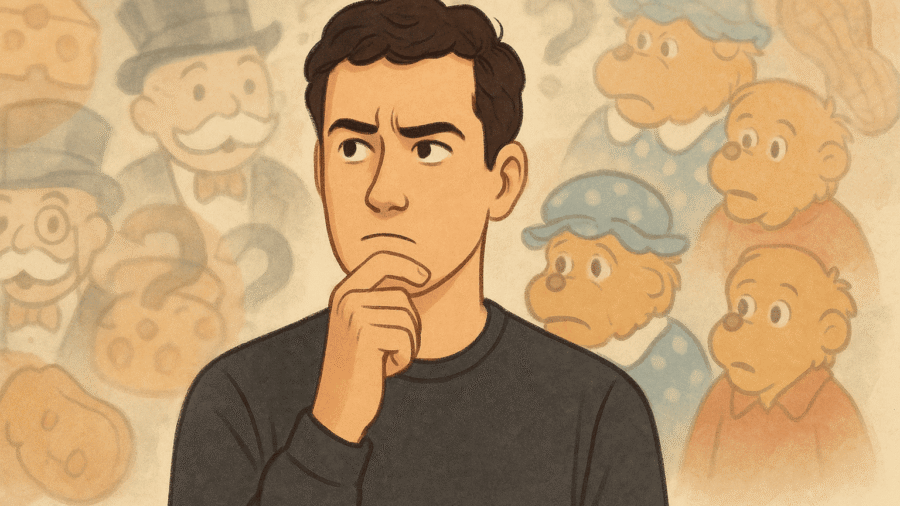
You are walking down a street in a new town you have never been to before and then all of a sudden you get a shiver down your spine. The houses, the scent in the air, the rustling sound of a passing bicycle all suddenly becomes to feel eerily familiar. Immediately, a thought flashes through your mind, “It seems I’ve been here before”. But deep down, you know you haven’t.
This strange sensation is known as déjà vu. A fleeting and mysterious moment when the present feel like something from the past. As much as it might feel spiritual or unsettling, science is gradually uncovering why déjà vu happens and what it might reveal about how our brains work.
Let us get to the root of this brain puzzle.
What Is Déjà Vu?
“Déjà vu” is a French phrase that means “already seen.” It is the uncanny feeling that the current experience has happened before, even though there is no clear memory to support it. It typically lasts just few seconds but leaves a strong lasting impression.
Research shows that around two-thirds of people report having experienced it at least once in their lives.
According to Cleveland Clinic, déjà vu happens when the brain’s memory and perception signals get out of sync, creating a false feeling of familiarity.
For example, you might walk into a room for the first time and suddenly feel like you’ve been there before, even though you know you haven’t. That strange “I’ve seen this before” feeling is déjà vu in action.

The Science Behind Why Déjà Vu Happens
Modern psychology and neuroscience suggest that déjà vu happens when the brain wants to double-check information. When your brain gets signals from memory and perception that don’t perfectly match, it can create the strange feeling that you’ve experienced something before, even if it’s completely new.
A review in Neuroscience & Biobehavioral Reviews by Aitken et al. (2023) explains that this feeling arises when something seems familiar, yet your mind simultaneously recognises that it shouldn’t be.
Normally, when something happens, your brain knows whether it is new or remembered. But sometimes, there is a little mix-up:
- Your brain feels like something is familiar.
- But at the same time, it knows it should not feel familiar.
The conflict brings about the odd “I’ve been here before” sensation.
Things that can make déjà vu more likely include:
- Being tired or stressed – your brain does not process things as smoothly.
- Going somewhere new – if it looks a bit like a place you’ve seen before, your memory can become confused.
- Seeing something twice quickly – Foe example; glancing at a scene, looking away, then looking back. The second time feels like a memory instead of the present.
What Déjà Vu Emotionally Means
For some, déjà vu feels eerie. To others, it brings comfort, as if the universe is whispering that there are patterns to life larger than we see.
According to science, it might also be a cue to slow down and observe the here and now. According to Kennedy (2023) from Psychology Today, stress, tiredness, or strong emotions often come before déjà vu. In that sense, it may be your brain’s way of saying, “Breathe and pay attention to where you are right now.”
What to Do When It Happens
If you experience déjà vu, there is nothing you need to fix. But you can make the most of it by:
- Taking a deep breath and grounding yourself in the present
- Paying attention to what feeling or thought the moment triggers
- Journaling the experience if it feels significant
- Checking in with your stress and sleep levels
Sometimes, déjà vu is a gentle tap on the shoulder, asking you to slow down and notice where you are in your life.
But if you begin to experience déjà vu more often and with other symptoms like confusion or memory lapses, it will be a good idea to speak to a healthcare professional.

Making Peace with the Mystery
Nobody fully understands why déjà vu happens. But think of it this way as your brain is like a storyteller, always turning moments into a smooth story. Sometimes, the story skips and that’s when you feel déjà vu.
So next time it happens, just pause. Notice what’s around you, the sights, the sounds, even how you feel. Déjà vu does not last long, but it can be a gentle reminder that you are here, you are alive, and your life is happening right now.
REFERENCES
Aitken, C. B., Jentzsch, I., & O’Connor, A. R. (2023). Towards a conflict account of déjà vu: The role of memory errors and memory expectation conflict in the experience of déjà vu. Neuroscience & Biobehavioral Reviews, 155,105467. https://www.sciencedirect.com/science/article/pii/S0149763423004360
Cleveland Clinic. (2025, June 17). Déjà vu: What it is and when it may be cause for concern. Cleveland Clinic. Retrieved August 30, 2025, from https://health.clevelandclinic.org/deja-vu-what-it-is-and-when-it-may-be-cause-for-concern
Kennedy, J. J. (2023, December 20). The fascinating science of déjà vu. Psychology Today. Retrieved August 30, 2025, from https://www.psychologytoday.com/us/blog/brain-reboot/202312/the-fascinating-science-of-deja-vu
Add a Comment